Call for Devrooms for IndiaFOSS 2026

Like last year, IndiaFOSS 2026 will have devrooms. And in case you haven’t been following the news, it’s happening on Sep 26,27. Same place!

Devrooms are half day mini-conference tracks (3 hours programme duration) inside the conference. The idea is that this puts more of the conference contents in the community’s hands.

Devrooms may be proposed by a self organizing group in the community. Devrooms are based on topics relevant to a broader subset of the community, or a special interest topic, etc. Devroom proposals are being solicited in advance. The IF 2026 conference committee will review and select devrooms from the proposals. Building on the success of this idea in IF2025, we may select 6-8 devrooms this time!

The call for proposals (CFP) for IndiaFOSS 2026 will be a generic CFP that will mention and link to separate CFPs for each selected devroom. The conference talk submission page will accept talk proposals both for the main track, as well as selected devrooms (these will show up as “tracks”). Anybody may propose sessions for any track.

Each devroom must be represented by two managers (2 for redundancy). These managers are responsible for the following:

  • Finalize a CFP for their devroom.
  • Circulate the CFP in their community or interest group. The Programme Committee (composed of the co-chairs of the conference) shall let selected devrooms know when to do this.
  • Review and finalize proposals to create the devroom programme, in a timely manner. We recommend starting rolling reviews 2 weeks after the CFP is issued.
  • Work with the Programme Committee to finalize the schedule.
  • Run the devroom according to the schedule during the conference

Devroom managers may also rope in additional volunteers to help review proposals. During the conference, devrooms shall be recorded and live-streamed. Each devroom may also have up-to two volunteers to help with the logistics of running the devroom, including:

  • Coordinate with selected speakers to ensure everything runs smoothly and on time
  • Introduce speakers
  • Work with video recording and live streaming POCs
  • Work with other conference volunteers for important tasks (beginning of sessions, administrative stuff, etc)

Devrooms shall be held in a few rooms of varying sizes. We have the larger Audi 3 with 120 seats, the smaller room with 35 seating. We also considering use of other places in the venue to run devrooms.

Devroom Proposals

Devroom proposals must be posted as a response to this discussion thread. The person who posts a devroom proposal will be deemed the primary contact for the devroom, and also a devroom manager.

A devroom proposal must include the following:

  • Devroom title
  • Details of two managers
    • Name of each manager
    • Short intro and reason/motivation to run the devroom. Please highlight any prior experience running/involvement in events or conferences
  • Some indication that the devroom would be able to generate enough content for the entire 3 hour slot (“proof of feasibility”)
  • Number of volunteers requested for the devroom
    • Proposal reviewerss (max 2). Names of the reviewers need not be published on the forum at this time to preserve anonymity, but the Managers must have decided the names by the time they propose the devroom.
    • Logistics volunteers for the devroom (max 2). Names can be decided later.
  • CFP for the devroom talks. CFP must include the scope of the talks recommended for this devroom.

Also see IF 2025 devrooms and the IF 2025 call for devrooms thread for ideas about how things panned out last time.

Key Dates

  • Call for devrooms open : March 23rd 2026
  • Last date to submit devroom proposals : April 25th, 2026
  • Intimation of devroom proposal acceptance: May 2nd, 2026
  • Devrooms to start circulating their CFP : After confirmation of acceptance
  • Last date for sumission of session proposals : TBA (To be announced)
  • Devrooms to finish reviews and finalize sessions for their devroom : TBA
11 Likes

I was late last year, so this year I’m happy to kick things off with our proposal :slight_smile:

At IndiaFOSS 2025 we hosted this Devroom to great success. We had 7 talks across the 3 hour window (Link to Playlist), and received good reviews from the audience. We hope to be back this year as well!

*Devroom title

Compilers, Programming Languages and Systems.

Details of two managers

@Ashutosh_Pandey : Senior System Software Engineer at AMD.
Pradeep Kumar : Senior System Software Engineer at NVIDIA.

Both of us are co-organizers of the LLVM Social Bangalore Meetup. We are also Co-chairs of the organizing committee of the Innovations In Compiler Technology (IICT) Workshop. LLVM Social Bangalore is the largest Compiler Meetup in the world with 3200+ members, while IICT is one of the only Compiler workshops in India that brings together academicians and Industry experts.

All our meetups are recorded and hosted on our YouTube channel (1.87k subscribers).

Ashutosh has also given a talk at IndiaFOSS 2024 : Link

Motivation

India (Bangalore, Hyderabad and Pune) have thousands of engineers working on Compilers, Programming Languages and Systems. While it might be dwarfed by the number of software engineers working in other areas, it is a very well connected community – Professors, Engineers and students collaborate closely to work on technologies such as LLVM, MLIR, GCC and tools.

LLVM Social Bangalore is a 7 year old Meetup that has a consistent track record of hosting meetups with hundreds of attendees. Our recent meetups in 2026 (at DSCE and Nvidia office) were each attended by 120+ individuals with only one week’s notice. We have an active WhatsApp community of 800+ individuals. We have also hosted our own workshop (IICT) with 380+ attendees in 2025.

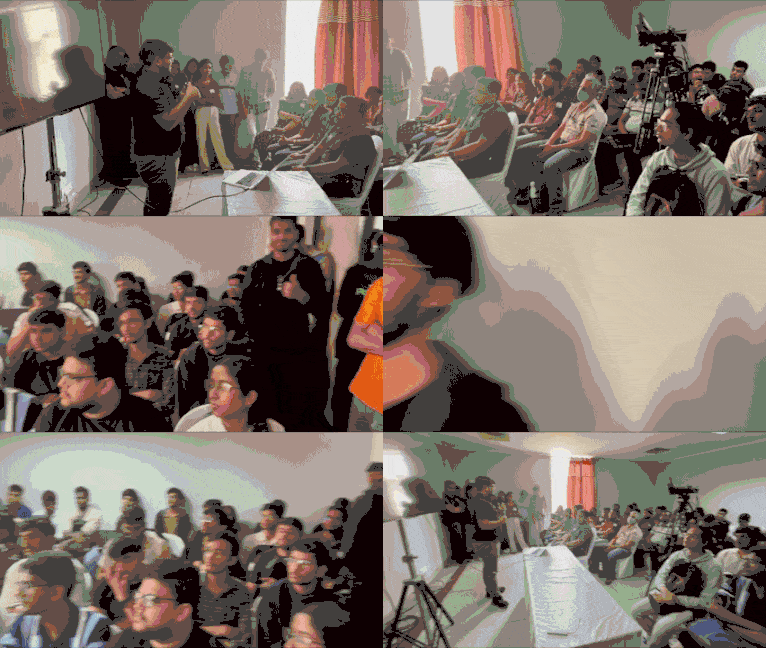
At IndiaFOSS 2025, the devroom saw massive participation. We had to borrow 15 extra chairs for the 35 seater room, and even then 20+ people had to stand throughout the 3 hour event!
GIF of the crowd from last year attached below:

Pi7_GIF_CMP(1)

Some indication that the devroom would be able to generate enough content for the entire 3 hour slot (“proof of feasibility”)

Compilers and Programming Languages is a very wide area, with applications relating to High Performance Computing, AI workloads, Systems engineering etc. In our 2025 IICT Workshop, we had 24 talks in two days (8 hours per day). This was after we pruned the submissions. There are also several other systems meetups in Bangalore (rust Bangalore, Zig Meetup, Bengaluru Systems Meetup), each with many hundreds of followers. 3 hour slot should be easy to fill, we intend to have 10 - 20 minute lighting talks followed by short Q/A sessions for maximum coverage.

Number of volunteers requested for the devroom

2 volunteers should be enough. Someone familiar with the projector/microphone setup. Otherwise the managers are used to Organizing meetups and should be fine on their own.

Proposal reviews (max 2).

We will have 2 reviewers from our community that are NOT the managers themselves.

Logistics volunteers for the devroom (max 2).

2 volunteers are enough.

CFP for the devroom talks

We’re looking for talks that encompass the Compilers, Programming Languages and tools space. While most of these are Open Source by default, for IndiaFOSS we must be explicit: talks on proprietary frameworks where the code is not public under an open source license are NOT allowed.

What we’re looking for -

  • Talks related to LLVM, MLIR, GCC and other Compiler frameworks.
  • The intersection of Compiler and toolchain technologies with AI, security and other spaces.
  • Domain Specific Programming Languages
  • Compiler Tools
  • Compiler Optimizations
  • Just In Time (JIT) compilation
  • Hardware/Software Co-design

Talk Duration : 10 - 20 minutes, under exceptional circumstances we may allow 30 minute talks, but no more.

9 Likes

Devroom title

Cloud & DevOps

Details of two managers

Pratik Singh : Distribution Engineer at Gitlab
Akash Singh : Devops Engineer at FinalRoundAI
Dhruv Puri : Devops Engineer at Aspora / Murena (Backup Maintainer)

The three of us are co-leads of the Point Blank Community. We are also international speakers in Cloud and Devops Domain in conferences like Kubecon, FossAsia, KCD, Open Source Summit NA, DevopsDays Geneva among other national conferences and universities. Akash and Dhruv have been long time contributors in Cloud Native Ecosystem including projects like LitmusChaos, Kyverno, KRO, Prometheus Operator, KCL, Karmada. Akash and Dhruv are also Google Summer of Code and Linux Foundation Mentees in CNCF organisations. We also maintain our own open source projects at Point Blank.

We regularly host events and lectures related to Cloud Native ecosystem and open source projects , which are recorded and stored on our YT channel : https://www.youtube.com/@pointblank_club

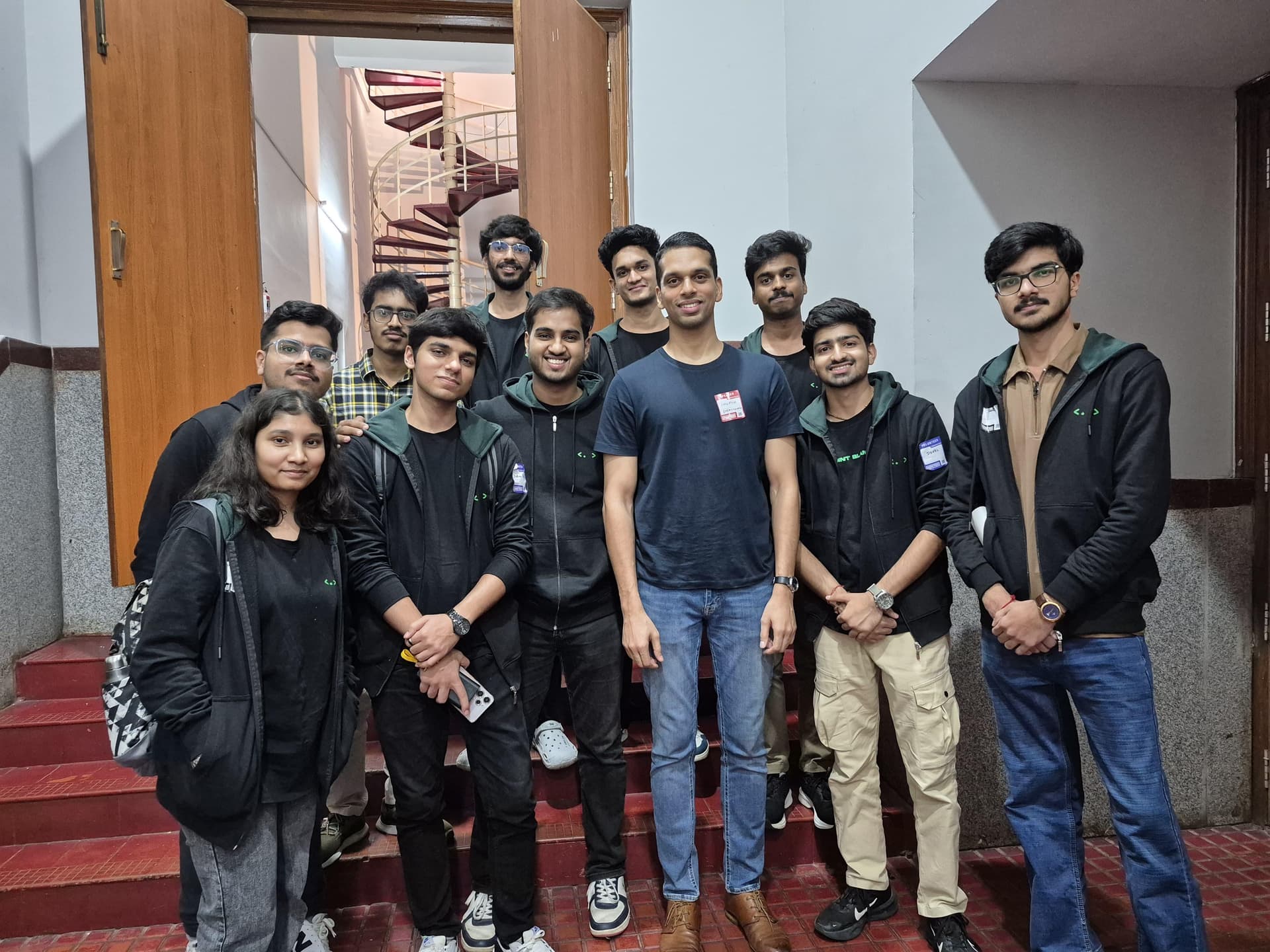
Our team was also involved in hosting the Compilers Devroom last year under Ashutosh Pandey. We have prior experience of handling large events and conferences, including Innovations In Compiler Technology (IICT) Workshop. Our team was also involved in volunteering for IndiaFOSS last year:

Motivation

India has one of the highest number of Cloud Native ecosystem of maintainers and contributors, with the highest number of Kubestronauts across the world. While the community spans a wide spectrum from SREs and platform engineers to cloud architects and open source contributors, it is a deeply connected ecosystem where contributors, maintainers, and users from early stage startups to global enterprises come together around the technologies shaping the CNCF landscape.

Cloud Native Ecosystem events like KubeCon + CloudNativeCon India (2 years old), Kubernetes Community Days, Cloud Native Bangalore etc have huge participation and attendance every year. The events we hosted at Point Blank around Devops and Cloud have over 400 students attending. The Devops and Cloud community in India is big enough that a 35 seater room would leave people standing in the background, hence the 120 seater room would be better. We have also hosted our own compiler workshop (IICT) with 220+ attendees in 2024 and 400+ in 2025.

Some indication that the devroom would be able to generate enough content for the entire 3 hour slot (“proof of feasibility”)

Cloud Native and Devops communities are always a very hot topic in the community. Conferences like Kubecon, KCD have hundreds of people submitting CFPs and thousands of people willing to listen to the speakers. There are also lots of smaller cloud native communites and open source projects that would love to share their usecases / quirks with a wider audience. A 3 hour slot is going to be quite easy to fill, Ideally we have 10 minute lighting talks (with exception for 20 min talks) followed by short Q/A sessions for maximum coverage.

Number of volunteers requested for the devroom

2 volunteers should be enough. Someone familiar with the projector/microphone setup. Otherwise the managers are used to Organizing meetups and should be fine on their own.

Proposal reviews (max 2).

We will have 2 reviewers from our community that are NOT the managers themselves.

Logistics volunteers for the devroom (max 2).

1 volunteer is enough.

Call for Proposals (CFP)

We invite proposals centered on open-source Cloud Native technologies, DevOps practices, and the broader infrastructure ecosystem. As with all IndiaFOSS devrooms, talks on proprietary frameworks where the code is not publicly available under an open-source license are NOT allowed.

We’re looking for talks across (but not limited to) the following areas:

  • Cloud Native Infrastructure & Orchestration: Kubernetes internals, operators, controllers, multi-cluster management, and service mesh.
  • Observability & Reliability: SLOs, SLIs, error budgets, chaos engineering, distributed tracing, and incident response.
  • Platform Engineering & Developer Experience: Internal developer platforms, GitOps workflows, and self-service infrastructure.
  • Open Source Project Deep Dives: Contribution stories, architecture walkthroughs, and lessons from maintaining CNCF and related projects.
  • Real-World Case Studies: Production war stories, migration journeys, cost optimisation, and reliability wins from teams of any size.

Selection criteria (in order of preference):

  1. Talks featuring hands-on contributions to or maintenance of open-source Cloud Native projects
  2. Real-world case studies with concrete takeaways
  3. Deep technical dives into CNCF ecosystem tooling
  4. Community and ecosystem talks (contributor journeys, mentorship, GSoC/LFX experiences)
  5. All other relevant proposals

We welcome both technical talks and experience-driven sessions. Preferred durations are:

  • 10 + 5 min — Lightning Talks
  • 20 + 5 min — Extended Sessions
4 Likes

Documentation & Technical Writing devroom

Motivation

Documentation has always mattered in free and open-source software, but it is easier now to see just how much work it has been doing all along. The old “talk is cheap, show me the code” line made sense when code was still the expensive part; it lands differently in a moment when code is cheap and the talk around it has started to matter in new ways. What feels scarce now is judgment: deciding what is worth saying, how to say it clearly, what can be trusted, and who is willing to stand behind it. That is part of why documentation feels heavier now than it did a few years ago. As output becomes cheap to generate and expensive to verify, the people and projects that can still make technical work legible, dependable, and teachable start to matter much more.

That is the conversation this (proposed) devroom is trying to make room for. Not documentation as a side task or cleanup pass, but documentation as one of the places where projects explain themselves, onboard contributors, record intent, and earn trust. In healthy FOSS projects, it is often the difference between software that merely exists and software that other people can actually use, extend, or join.

It is also one of the clearest ways communities come to understand themselves. People many of us already recognise make that point quietly but clearly: Carol Willing in notebook and Jupyter circles, Daniele Procida through Django and Diátaxis. Their example is useful not because they are exceptions, but because they show what happens when writing, explanation, structure, and stewardship become part of the project itself. The person who writes clearly often ends up shaping how the rest of the community understands what the project is, what it values, and how others are meant to enter it.

There is already enough of an overlap around IndiaFOSS for this conversation to hold together well: maintainers shipping docs as part of project work, people writing for developer audiences, contributors who begin with guides or README fixes before moving deeper into projects, and notebook- or tutorial-heavy communities that think about explanation as part of the technical work itself.

Proof of feasibility

This is a broad enough area to fill a strong three-hour programme without stretching. Documentation in FOSS now spans writing and editorial craft, docs-as-code workflows, information architecture, review and governance, contributor experience, accessibility, translation, reference generation, migration work, and the changing relationship between documentation and AI-assisted systems. Once you look a little closer, the topic opens out very quickly.

That is partly because most documentation problems in FOSS projects are not prose problems. They are type problems, architecture problems, and ownership problems. A tutorial that tries to be reference stops being a tutorial. A how-to that drifts into long background explanations stops helping someone do the thing. References that tell people what they should do instead of what the system does stops being referenced. That is why frameworks like Diátaxis matter here not just as neat classification schemes, but as diagnostic tools: they help explain why documentation breaks, not only how it should look.

The speaker pool is also wider just technical writers; it extends to maintainers, educators, developer advocates, tooling authors, community organisers, etc. There is room for talks about writing and editorial judgment, docs testing, API and reference docs, notebook-shaped and interactive documentation, migration stories, contributor pathways, changelogs and release notes, review standards, and the practical reality of using AI around docs without giving up on verification or ownership.

There is also a strong case for making interactive documentation part of the scope from the start. Notebooks, executable tutorials, live examples, and browser-based teaching material have changed what many people now expect from technical docs, especially in scientific Python and adjacent ecosystems. I (Srihari) have a well-known soft spot for this kind of thing after spending so much time around notebooks, and that bias is probably useful here: interactive docs are no longer a novelty, they are one of the clearer ways explanation and experimentation have started to collapse into the same surface.

A three-hour slot should fit comfortably as six to seven standard talks. For a first edition, the smaller 35-seater room feels like the better fit.

Call for Proposals

The Documentation & Technical Writing devroom is for people who write, maintain, design, test, publish, or think seriously about documentation in free and open-source software.

Tooling and workflow: We would love talks about the practical stack around documentation work: Sphinx, MkDocs, MyST, and the docs-as-code workflows around them; preview environments, validation, link checking, CI, versioning, reference generation, and the migration work involved in moving older / legacy documentation systems to something more modern / maintainable. We are also interested in talks about interactive documentation, executable examples, and publishing patterns that let readers learn by trying.

We are equally interested in talks about information architecture, editorial judgment, and writing that actually helps people get unstuck. That could include tutorials, how-tos, reference docs, contributor guides, API docs, changelogs, and the decisions that make those formats work.

AI, verification, and trust. We would welcome talks about what LLMs are changing in documentation practice: where they help, where they flatten judgment, how teams verify AI-assisted output, and how projects think about provenance, review, and trust when text is easy to generate and harder to stand behind.

Contribution paths and community. We would also like proposals about how people enter FOSS through writing: blogs, README improvements, beginner-friendly guides, onboarding docs, translations, examples, public notes, and community-facing explanations. Programmes such as Google Season of Docs are worth mentioning here as part of that history, even though the programme itself has now concluded; the broader lesson still stands, which is that documentation has long been a real contribution path into open source.

Governance and editorial policy. Another angle we would be glad to see is how projects handle ownership, review standards, voice, deprecation, and editorial consistency over time. These questions often decide whether docs remain trustworthy long after the first good draft is written.

As with all IndiaFOSS devrooms, talks centred on proprietary tools whose code is not publicly available under an open-source licence are not eligible (not looking for product pitches). We are looking for talks that add something useful back into the commons.

First-time speakers are warmly encouraged.

Selection criteria

  1. Talks grounded in hands-on work with or contributions to open-source documentation, tools, or projects

  2. Real-world case studies with concrete takeaways

  3. Deep dives into specific tools, workflows, migrations, or architectural decisions

  4. Community and contributor-journey talks, where they offer clear and useful insight

  5. All other relevant proposals

Preferred talk durations

We would be happy to accept both 10 + 5 minute lightning talks and 20 + 5 minute standard sessions.

Organisers and devroom support

The primary contact for the devroom would be Srihari Thyagarajan, Technical Writer at Deepnote, co-organiser of SciPy India, an active participant across PyCon India, IndiaFOSS, and FOSS United circles, and involved in early efforts around kickstarting the WriteTheDocs India chapter. They recently ran a workshop on technical writing in the age of AI, and some of the thinking behind this proposal is visible both in the slides.

Agriya Khetarpal: would be involved as a supporting organiser. He is a software engineer and open-source maintainer working across the Scientific Python ecosystem, including projects such as Pyodide and JupyterLite.

For proposal review, we expect to be able to draw on ~two reviewers.

Devroom Title:
Android Open Source Project (AOSP) Devroom

Devroom Managers:
Sumit Semwal
Amit Pundir

Both of us are part of the Program Committee of Android Micro-conference at Linux Plumbers Conference and Open Source Summit India. We also helped run the AOSP devroom at IndiaFOSS 2025. We had a good participation last year, so we want to continue this year as well.

Short intro and motivation to run the devroom:
AOSP is an important part of the FOSS ecosystem. It is the most widely used open-source operating system, yet its development is often perceived as inaccessible compared to traditional Linux distributions. AOSP devroom will provide developers, maintainers and enthusiasts an open and collaborative space for discussions that are otherwise fragmented across forums, mailing lists, and private groups.

Feasibility:
India has a large number of developers working on or around AOSP-based projects. Several custom ROMs, kernel projects and XDA/LineageOS forums have Indian developers as core contributors.

Many Indian startups and companies customize AOSP for industrial, enterprise and automotive use.

AOSP is a great way to learn operating system concepts, especially for students and developers interested in systems programming and kernel development.

So we are hopeful that if we promote it well, the AOSP devroom can attract a good crowd of AOSP contributors or enthusiasts, whether as speakers or attendees.

Number of volunteers requested for the devroom:
Proposal reviewers: 2
Logistics volunteers: 2

CFP scope:
Anything AOSP. For the AOSP devroom, we will look for the topics that appeal to both beginner and advanced AOSP developers. Topics including, but not limited to:

  • AOSP Bring-Up & Porting Challenges
  • Android Common Kernel
  • Android Bootloaders
  • AOSP community and ecosystem
  • Deep dive into AOSP framework/internals and Security
  • Performance optimization and debugging stories
  • AOSP tutorials, tips-n-tricks
  • Headless Android
  • Android Automotive

Submission Types:

  • Lightning talks (10 + 5 minutes)
  • Regular sessions (20 + 5 minutes)