Problem Statements and ideas - FOSSHack 2026

FOSSHack’s new month-long format is a good opportunity to work on meaningful ideas that solve actual problems.

Starting this thread to create a list of problem statements sourced from Civil Society Organisations and Non profits, Partner projects/orgs, and other fellow maintainers. Participants who are looking for ideas to work on can pick up things from this list. Do checkout the original Hackathon Ideas post as well!

3 Likes

Thanks for reaching out about OSM-related hackathon ideas, @ansh . Here are some initial thoughts for your review, to see if I’ve understood correctly.

Code-related ideas

Here are some code-related ideas, off the top of my head. These are features that could be added to existing OSM-based applications.

CoMaps tasks

CoMaps is an offline-first libre map app for Android and iOS, written in C++.

Participants could pick one or more tasks that interest them.

  1. Add a satellite imagery layer.
  2. CoMaps uses OSM route data to provide offline Metro navigation. But OSM also has route data for buses, trains, share autos, and e-rickshaws. Implement a public transit mode which has support for all those route types.
  3. When a user taps a public transport platform (bus stop, railway or Metro platform, ferry pier, etc), list the public transport routes that serve that stop. Selecting one of those routes should display the public transport route.
  4. OSM provides indoor data (rooms, corridors, etc). CoMaps renders 3D buildings. Add 3D rendering for indoor data, and a UI for switching between multi-level data.
  5. Add support for indoor routing (navigation).
  6. Mangrove Reviews is a libre database of ratings and reviews. Add Mangrove Reviews support to CoMaps, by integrating ratings and reviews with offline map downloads, and showing ratings and reviews of places wherever available.
    • Bonus task - allow users to submit their own ratings and reviews to Mangrove Reviews.
  7. Wikimedia Commons is a libre database of photos, videos, and other media. OSM data links to Wikimedia Commons to allow associating photos with places. Add Wikimedia Commons support to CoMaps, by integrating photos with offline map downloads.
    • Bonus task - allow users to upload their own photos to Wikimedia Commons.

(I have tasks for other projects in mind as well, such as OsmAPP (React+NextJS) and OsmAnd (90% Java, 10% Kotlin).)

Data-related ideas

Map the addresses of a neighborhood

Addresses are some of the most important data we can add to OpenStreetMap. They are useful to many people and services (delivery, ambulance, fire brigade, power, water, police, etc).

Dense urban colonies in particular are the most challenging areas for adding addresses, but - because of their unplanned and chaotic nature - also the place where this data is most needed.

Indian addresses are also highly variable, so I’ll be guiding mappers with the best tools and techniques to capture the complex realities as best as we can.

Map the transport routes of your neighborhood, village, or city

Many transport corporations do not have route data for their bus services.

Additionally, many places (like Lucknow, Indirapuram, etc) are highly dependent on informal public transport like share autorickshaws and share e-rickshaws. They usually follow more-or-less static routes, but there is no support for them in proprietary maps like Google Maps.

Fortunately, projects like OpenStreetMap and Transitous allow us to document bus and share auto/share e-rickshaw routes ourselves, and apps like OsmAnd and GNOME Maps, KDE Itinerary, etc allow us to use this data to plan trips.

More!

There can be way more themes of this sort. Some that come to mind are mapping healthcare, surveillance, mapping for wheelchair users, for blind users, for cyclists, for women, and so on.

6 Likes

Open Traffic Incident Management System and Service

Traffic incidents, road closures, road repair work, hazards, JAM, public events on roads etc., are very common in India. They affect us every day. It will be useful information to have when planning our travels.

There are many standards for reporting, publishing, and consuming on-road incidents. Some of them are closed (like Google Maps), and some are open only as a standard (Waze), not data. Some of them publish on a platform that can’t be used, like the Bangalore Traffic Police on Twitter.

So we need a system that would be available to civilians (drivers, travelers) and authorities (Police, NHAI, Civil governments) to publish incident data. Service providers like OSMAnd Apps, routing engines like OSRM, and alerting services to consume.

Open Traffic Incident Management System and Service:

  • Focused only on incidents and not on real-time traffic
  • It’s an open-source product and service. It’s a web app where users (civilians or authorities) can create an account and submit incidents. If required, it can go through its own publishing flow.
  • Once published, these incidents will appear in the feed
  • Apps or other consumers can subscribe to the feeds and use it
  • Supports one more standard for publishing the incidents. To begin publish city/state feeds in the CIFS format

Standards

Build

Open Traffic Incident Management System and Service:

  • Django web app with posgtres+postgis
  • User accounts
  • Publish city and state CIFS feeds

Apps: OsmAND and CoMaps etc

  • P0: Write plugins, or add to the base app, the ability to subscribe to incident feeds via a URL. And show them onscreen when you are closer to them
  • P1: Use them while routing if the user wants to avoid the roads with incidents (similar to avoiding tolled roads) incidents

Current status

  1. Design phase: I have thought through it a bit about implementation but not fully explored or spoken to any one in city government. Without their participation its useless
  2. I don’t know any app that can use the feed directly , but these feeds can be submitted to Waze. It will be great to have OSMAnd plugin that subscribe to a feed on the app and show it.
3 Likes

CoRE stack related project ideas

1. Ecological restoration dashboard

Check out the waterbody rejuvenation tracking module on the CoRE stack. We want to build a similar module to track ecological restoration efforts. Given polygon boundaries of restoration areas uploaded by project managers, we would want to put out statistics such as tree cover change over the years, changes in canopy density and tree height, waterbodies in the area and changes in surface water availability in these waterbodies, etc.

2. Waterbody connectivity

On the Know Your Landscape dashboard, navigate to any tehsil and turn on the waterbodies layer. These are waterbodies identified through remote sensing models. The waterbodies are connected through drainage channels which are also available in the CoRE stack. We want to build an algorithm which first maps any waterbody with drainage line segments that intersect with the waterbody, and then traces the drainage line downstream to connect this waterbody with its downstream neighbour. The final waterbody connectivity graph should retain, for each upstream-downstream waterbody pair, information on the drainage line segments which connect these waterbodies. This will help make exciting analysis and visualizations possible, E.g. if a waterbody is clicked, all waterbodies upstream and downstream of it will become visible. This can be important to understand for flood water control.

Those interested in these projects must engage with the CoRE stack engineering team and build a firm understanding of the projects before starting. We have weekly dev calls at 3pm on Fridays. Details here.

1 Like

@contrapunctus can we contribute to valhalla?

Proposed Theme for FOSS Hack 2026

Netlist-to-Verilog Converter for Digital Circuits in eSim

Participants will develop a tool that converts digital netlists generated in eSim into synthesizable Verilog code. This will enable digital circuits designed using the schematic editor to be exported and used in RTL-based design flows.

The script should parse the digital netlist and map commonly used components such as AND, OR, NOT, XOR gates, multiplexers, and flip-flops into equivalent Verilog constructs.

Expected Outputs:

  • A script/tool that parses eSim digital netlists

  • Mapping of supported digital components to synthesizable Verilog

  • Generated Verilog module for the given circuit

  • Example test circuits demonstrating correct conversion

  • Documentation explaining usage and supported components

Participants are encouraged to use open-source tools and contribute improvements that can be integrated into the eSim ecosystem.

This track aims to strengthen the digital design capabilities of eSim and enable interoperability with modern open-source digital design workflows.

1 Like

Design and Implementation of a Smart Routing and Process Validation Engine for a Process Flow Diagram (PFD) Tool

The existing Chemical-PFD-Web-Desktop platform allows users to design Process Flow Diagrams (PFDs). However, the current system lacks intelligent routing and validation capabilities.

Objective

Develop a Smart Process Logic Engine that enhances diagram intelligence using algorithmic logic.

Task 1 — Smart Auto-Routing Algorithm

When a user connects two components:

  1. The connection line should automatically:
    • Avoid overlapping with other components
    • Avoid intersecting existing connections
    • Take the shortest valid orthogonal path (horizontal/vertical)
  2. The connection should dynamically adjust when components are moved.

Participants must design their own routing logic (grid-based, pathfinding, etc.).

Task 2 — Process Validation Engine (Graph-Based)

Treat the PFD as a directed graph and implement validation checks:

  1. Detect isolated components (not connected)
  2. Detect invalid circular loops without processing unit
  3. Ensure at least one inlet and one outlet exist
  4. Validate that all components are part of a continuous process flow

Participants must:

  1. Convert the diagram into a graph structure
  2. Use graph traversal algorithms (DFS/BFS or equivalent)
  3. Provide real-time validation feedback in UI

Expected Deliverables

  1. Working implementation integrated into the existing codebase
  2. Documentation explaining:
    • Algorithm design
    • Data structures used
    • Complexity considerations
  3. Demonstration with test cases

Evaluation Criteria

  1. Correctness of routing logic
  2. Accuracy of validation engine
  3. Efficiency of algorithms
  4. Code quality and modularity
  5. UI feedback clarity

Additional Guidelines

Scope:
Participants may choose either:

  • Web version (React-based)
  • Desktop version (PyQt-based)
    or implement in both for bonus evaluation.

Constraints:

  1. No external auto-routing libraries allowed.
  2. Core algorithm must be implemented manually.
  3. AI tools may be used for guidance, but logic explanation is mandatory.

Open-Source Creative Campaign Challenge

Theme: Visual Communication for Real FOSSEE Subprojects


:dart: Objective

Design and produce a complete, ready-to-deploy digital media campaign promoting the adoption of a real subproject under FOSSEE. (https://fossee.in)

Participants must research, interpret, and visually communicate the selected subproject’s purpose, impact, and opportunities for students — using only specified open-source creative tools.


:pushpin: Core Challenge

  1. Visit the official FOSSEE website. (https://fossee.in)
  2. Select one active subproject (e.g., eSim, Scilab, OpenFOAM, etc.).
  3. Study its objectives, tools, impact, and student engagement opportunities.
  4. Transform that information into a cohesive visual campaign targeted at college students.

:warning: Direct copy-paste of website text is not allowed.
Content must be summarized, reinterpreted, and redesigned into original communication material.

Our activities are as following:
Workshops, Hackathons, Semester Long Internships, Animate2026, Competitions, FOSSEE Clubs, etc. You can visit our website https://fossee.in to get more details.


:hammer_and_wrench: Required Software

All core creative production must be completed using the following open-source tools:

  • Inkscape
  • GIMP
  • Scribus
  • Synfig Studio
  • Blender

Minor auxiliary tools (audio trimming, compression, etc.) are permitted, but primary asset creation must occur in the specified tools.


Mandatory Deliverables

Participants must submit:


:one: Campaign Identity (Created in Inkscape)

  • Campaign name (Exam: FLOSS + (Workshop/Hackathon))
  • Tagline
  • Vector logo (.svg required)
  • Basic brand guide (colors + typography)

:two: Print Communication (Layout in Scribus and graphics in Inkscape/GIMP)

  • One A4 poster (print-ready PDF)
  • One 2-page brochure explaining the selected subproject
  • Submit editable .sla source files

Brochure must clearly explain:

  • What the subproject is
  • Why students should use it
  • Key benefits
  • How to get involved

:three: Digital Media Kit (GIMP / Inkscape)

  • 3 social media creatives (1080×1080 px)
  • 1 web/event banner (800 x 120px)
  • Submit layered .xcf or .svg files

:four: Motion Explainer (Synfig OR Blender)

  • 60–90 second animated explainer (output in .avi format)
  • Submit editable .sifz or .blend file

The motion piece must:

  • Explain the selected subproject
  • Highlight student value
  • Include call-to-action

:file_folder: Mandatory Process Submission

To ensure authenticity:

  • Native editable source files
  • 5–8 work-in-progress screenshots
  • 300–500 word concept note
  • Tool usage declaration

Superficial file conversion does not qualify as valid workflow usage.


:no_entry_sign: Content & Integrity Guidelines

  • Content must be derived from official FOSSEE sources.
  • Information must remain factual.
  • Visual communication must be original.
  • Template-based submissions are not allowed.
  • AI tools may be used only for ideation; final production must be done in required software.

From Osdag, FOSSEE team at IIT Bombay:
Task-1: Develop a Python-based view cube for Osdag.

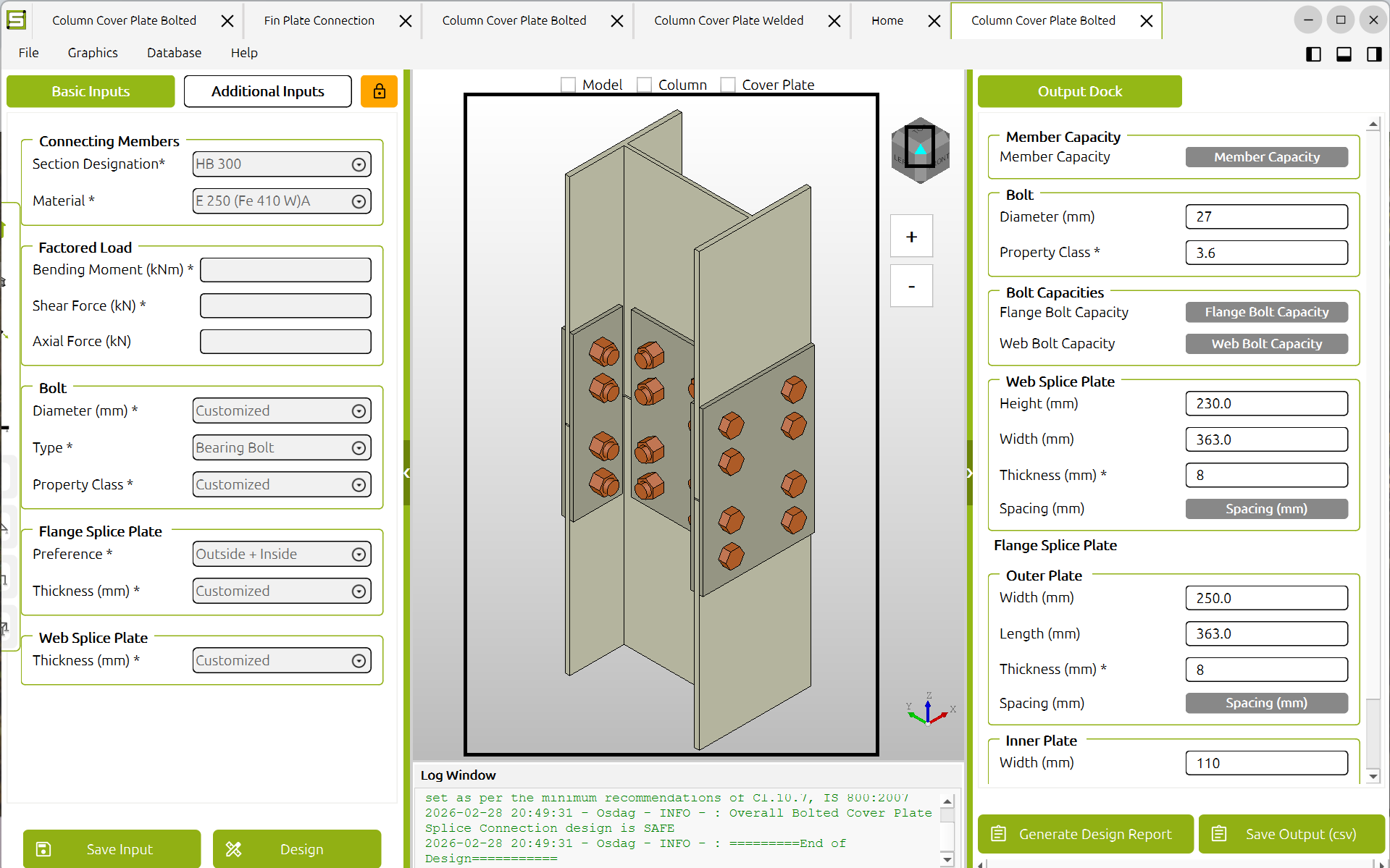
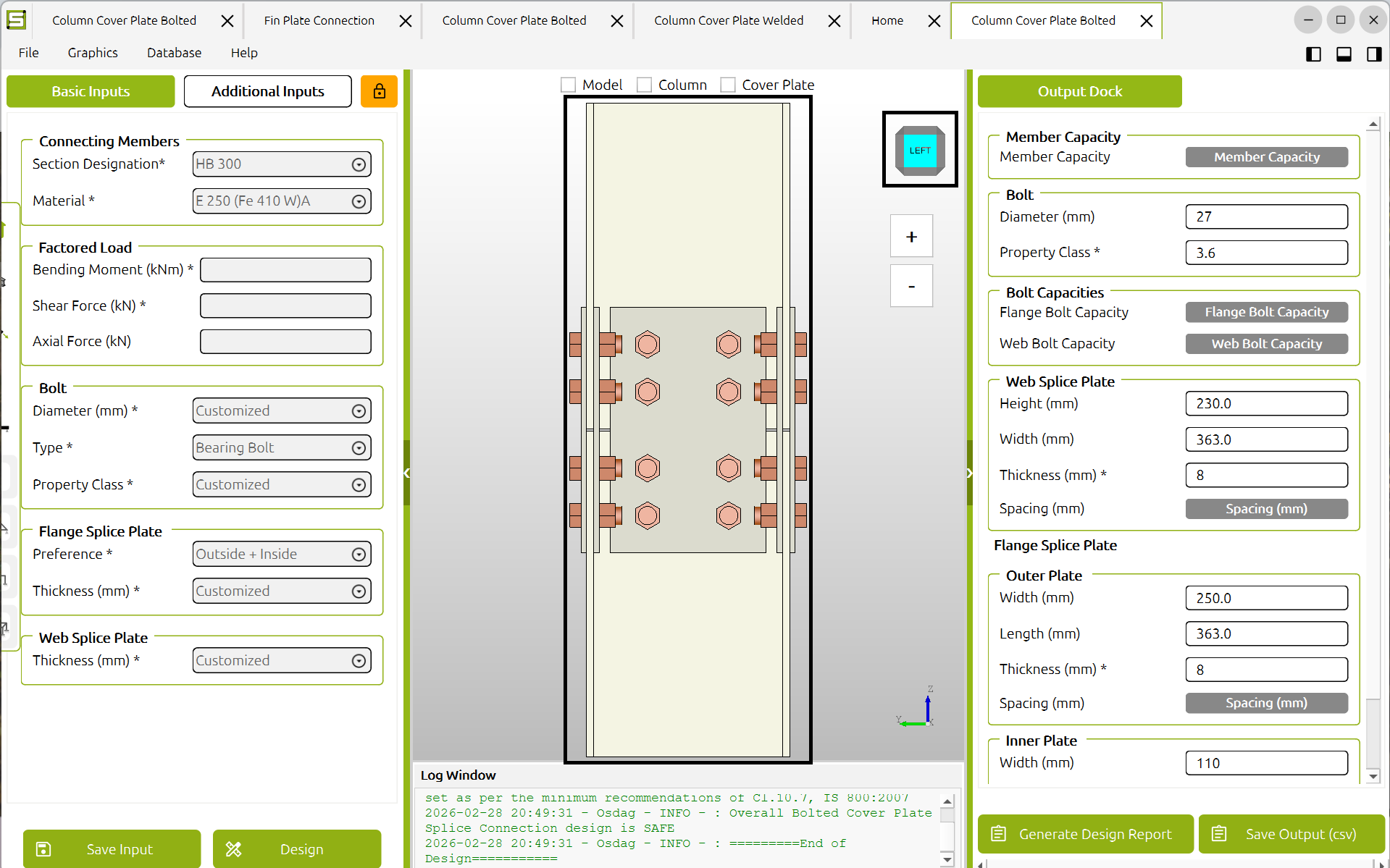
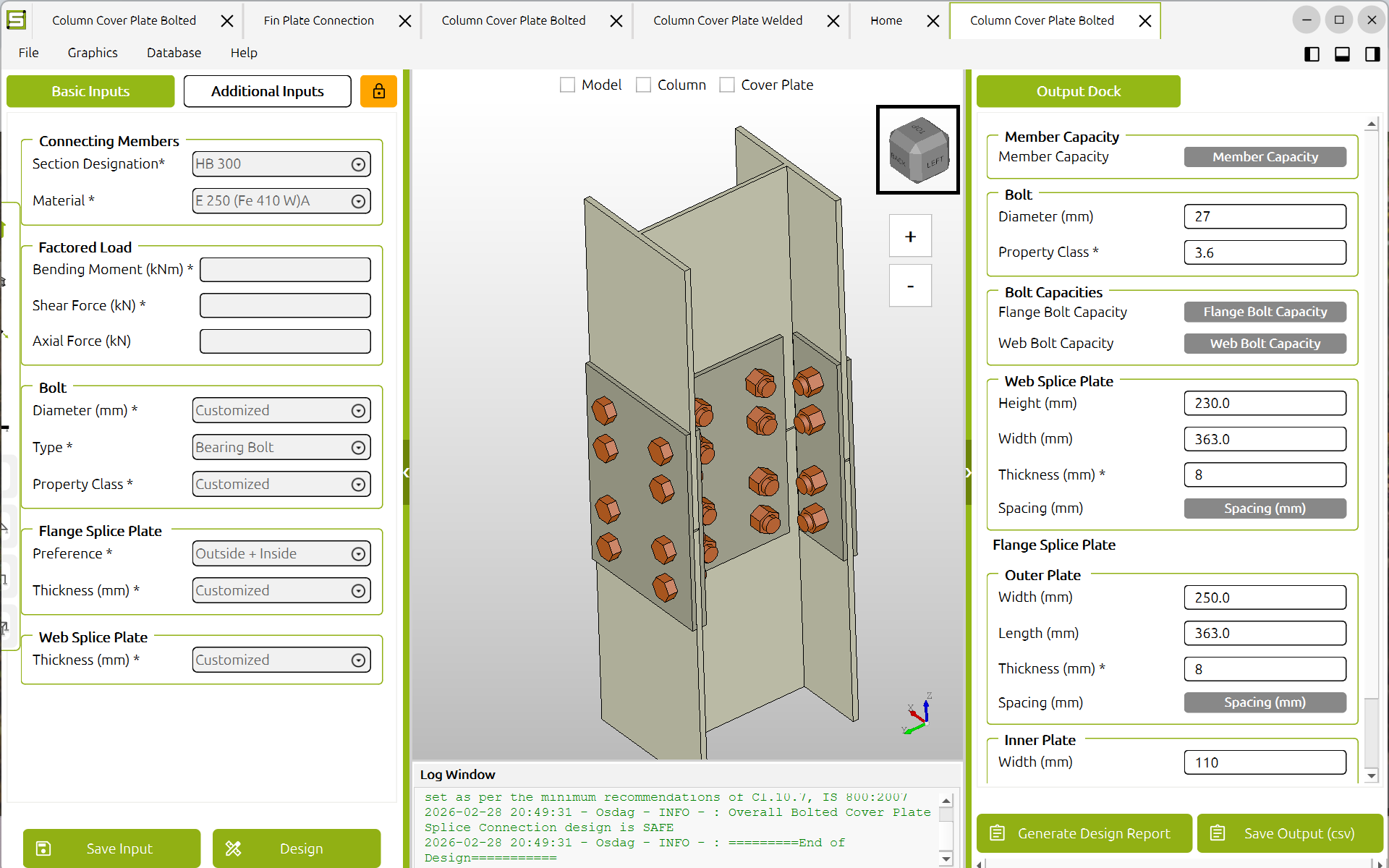
Participants will have to develop a custom Python-based view cube (like a navigation cube for FreeCAD). This cube shall have chamfered edges where the users can select a particular view. The cube should also be rotatable to see different sides.

Expected Outputs:

  • A cube with chamfered edges
  • All chamfered edges to allow the view at the specific angle
  • Mergable with the CAD window on Osdag

Participants should develop a Python-based custom cube.

This track aims to aid the interactiveness of CAD on Osdag while also focusing on its stability.

References:

  • In the current release version of Osdag (Downloads | OSDAG), a C++ based cube has been enabled, which is leading to crashes (especially on Linux machines).

  • The expected behaviour of the cube should be equivalent to the currently implemented cube (if not better than it).

  • The latest changes (without the cube) can be accessed from the GitHub repository on the dev branch (GitHub - osdag-admin/Osdag at dev). Users can set up the Conda environment with the instructions on the installation page on the website (Downloads | OSDAG)
    Caveats

  • The applicant will have to transfer the copyrights of it to the Osdag Team at IIT Bombay

The custom cube shall be entirely developed on Python (UI: PySide6, Python Version: >3.11)

Contact Us

  • Discussion can be initiated on the Osdag Discord Channel (on the forum thread under community): Osdag
  • Discussion can be initiated on the Osdag’s GitHub repository: osdag-admin/Osdag · Discussions · GitHub
  • Write us on: contact-osdag@fossee.in
  • Website: osdag.fossee.in


2 Likes