We are setting out to map the software ecosystems that power teaching, research and admin in public sector universities in India. Prompted by multiple conversations over the year, we’ve drafted a set of questions (we are grateful for the assistance from Anuj Nakade and Gyan Tripathi in drafting and vetting these questions) to file a series of Right to Information requests starting with the NITs, IITs, IIITs and IIMs. ( Set of questions: academia RTI queries.pdf (40.1 KB) )
We hope to find out
- How reliant universities are on proprietary vs open-source tools
- Who the dominant vendors are, how much are the institutions spending on procurement, and what the SOPs for procurement are
- What could be the FOSS alternatives to their needs.
At the end of all this, among other things, we hope to
- Collate all the responses, map the software needs, the costs
- Figure out a strategy to advocate for FOSS alternatives and digital sovereignty in education with constructive engagement with these institutions.
In August, we filed a pilot request with National Institute of Technology, Calicut to test the waters, here is the response from NIT Calicut.
res-NITCL-R-E-25-00076.pdf (1.6 MB)
While the PIO(Public Information Officer) at NIT, refrained from answering the bulk of the queries given the voluminous nature of the information requested, we did however manage to get figures on the annual software spend for the last 5 financial years.
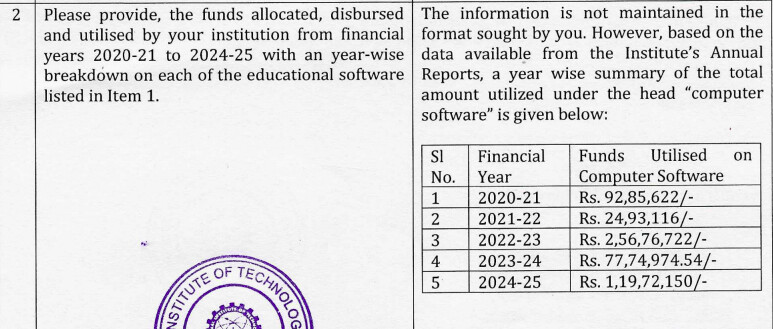
Based on this response, we’ll try to modify the queries, maybe even pick up on the offer to go inspect the files in person. In any case, we’ll keep you posted. In the meantime, if you have any questions/suggestions or feel like helping out with this adventure, feel free to ping in the replies.